Common Illnesses at Daycare and How to Prevent Them
Affiliate links — we may earn a commission
If your child is in daycare, they will get sick. This is not a failure of the daycare or your parenting — it is a predictable part of building an immune system. Children in group care settings typically experience 8 to 12 upper respiratory infections per year, compared to 5 to 6 for children cared for at home.
The good news: by the time daycare kids reach elementary school, they tend to get sick less often than their peers who were not in group care. Their immune systems have already encountered many common viruses. In the meantime, here is what to expect and how to minimize the impact.
The Most Common Daycare Illnesses
Upper respiratory infections (common cold): The most frequent illness, caused by hundreds of different viruses. Symptoms include runny nose, cough, mild fever, and fussiness. Most resolve in 7 to 10 days without treatment.
Hand, foot, and mouth disease (HFMD): Caused by coxsackievirus, this illness creates painful sores in the mouth and a rash on hands and feet. It spreads easily in daycare settings and is most common in children under 5. Most cases resolve in 7 to 10 days.
Gastroenteritis (stomach bugs): Norovirus and rotavirus cause vomiting and diarrhea that spread rapidly in daycare. Symptoms usually last 1 to 3 days but dehydration is a concern, especially for young children.
Ear infections: Often follow a cold, when fluid builds up behind the eardrum. Symptoms include ear pulling, fussiness, fever, and trouble sleeping. About 75% of children have at least one ear infection by age 3.
Pink eye (conjunctivitis): Bacterial or viral infection that causes red, goopy eyes. It is highly contagious and spreads through direct contact. Most daycares require children to stay home for 24 hours after starting antibiotic drops.
RSV (respiratory syncytial virus): A respiratory virus that is particularly dangerous for infants under 6 months. Most children get RSV by age 2. Florida’s RSV season typically runs from September through March.
Prevention Strategies That Actually Work
What You Can Do at Home
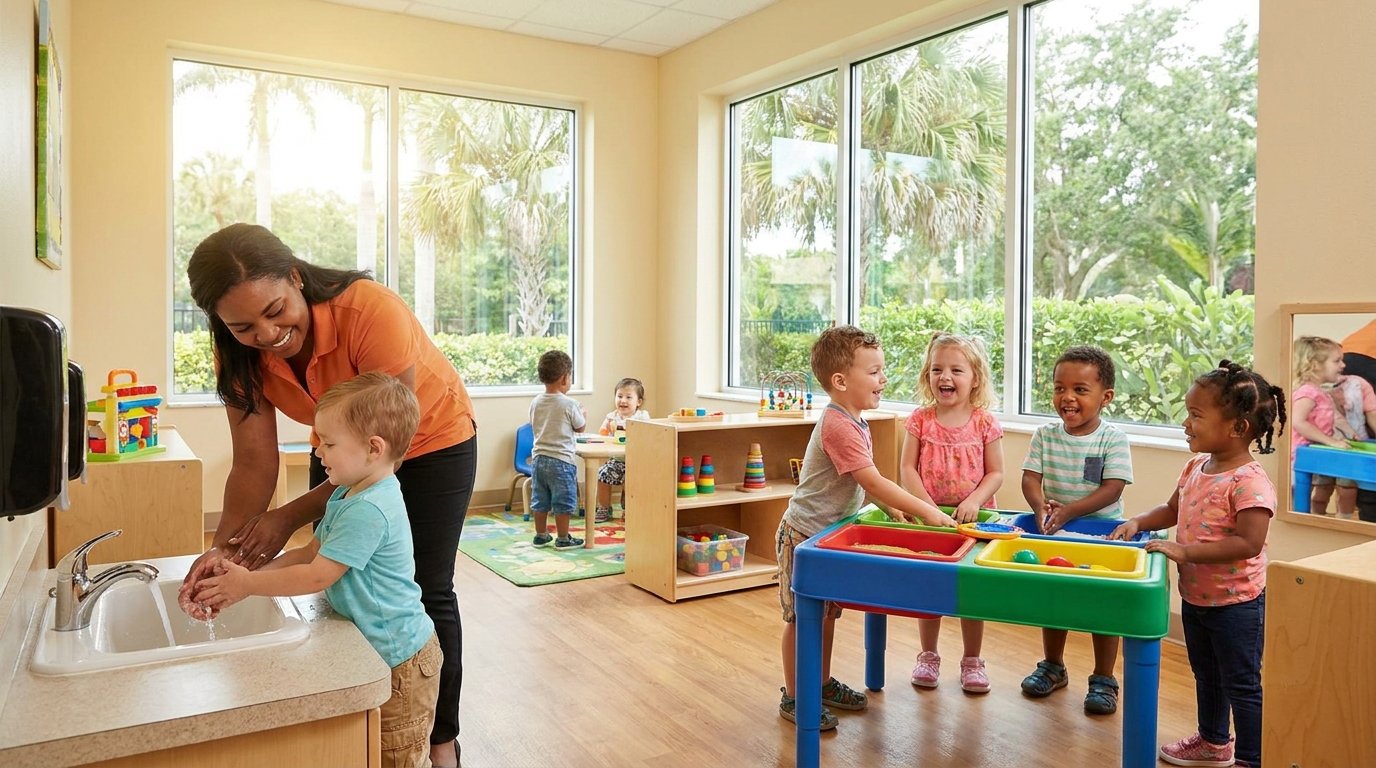
- Teach hand washing: 20 seconds with soap, especially after bathroom use and before eating. Make it a song to help young children time it
- Keep vaccinations current: Follow the CDC immunization schedule. Flu shots are especially important for daycare children
- Build immune resilience: Adequate sleep, balanced nutrition rich in fruits and vegetables, and regular physical activity all support immune function
- Keep sick kids home: Sending a sick child to daycare spreads illness to the entire class. Follow the 24-hour fever-free rule
- Clean shared items: Wash backpacks, lunchboxes, and water bottles daily
What to Look for at the Daycare
- Sanitization routines: Tables, toys, and surfaces should be cleaned multiple times daily with EPA-approved disinfectants
- Handwashing stations: Child-accessible sinks with soap at appropriate heights
- Diaper changing protocols: Gloved hands, sanitized changing surface, handwashing after every change
- Sick child policy: Clear guidelines about when children must stay home and when they can return
- Food handling: Proper food storage, preparation, and serving practices
When to Keep Your Child Home
Follow your daycare’s illness policy, but general guidelines include:
- Fever over 100.4 degrees F (keep home until fever-free for 24 hours without medication)
- Vomiting or diarrhea (keep home until symptom-free for 24 hours)
- Contagious rashes until cleared by a doctor
- Eye discharge (pink eye) until 24 hours after starting treatment
- Heavy, colored nasal discharge with fever
The Silver Lining
While the first year or two of daycare can feel like an endless cycle of illness, studies consistently show that early exposure to common viruses builds a stronger immune system. Children who attended daycare tend to have fewer sick days once they reach school age.
Choose a daycare with strong hygiene practices to minimize exposure. Use our Florida daycare directory to find licensed providers in your area.
Watch: Related Childcare Tips
Frequently Asked Questions
How often do kids get sick in daycare?
Children in daycare typically experience 8 to 12 upper respiratory infections per year during their first two years of group care. This is significantly more than home-cared children but leads to fewer illnesses in elementary school as the immune system matures.
Can I prevent my child from getting sick at daycare?
You cannot prevent all illnesses, but you can reduce frequency and severity through hand hygiene, up-to-date vaccinations, proper nutrition, adequate sleep, and choosing a daycare with strong sanitization practices.
When should I keep my sick child home from daycare?
Keep your child home with fever over 100.4 degrees F, vomiting, diarrhea, contagious rashes, or eye discharge. Most daycares require children to be symptom-free for 24 hours before returning. Always follow your specific daycare’s illness policy.
Is it normal for my child to be sick constantly in daycare?
Yes, especially during the first year. It is common for daycare children to have a new cold every 2 to 3 weeks during fall and winter months. While exhausting for parents, this is a normal part of immune system development.
Do Florida daycares have to follow specific sanitization rules?
Yes. Florida DCF requires licensed daycares to maintain specific sanitization standards including regular disinfection of surfaces, proper diaper changing procedures, food safety protocols, and handwashing requirements for both staff and children.
Explore More

Trusted Developer
Contributing writer covering Find Licensed Childcare Near You.