Potty Training at Daycare: What Florida Parents Should Know
Affiliate links — we may earn a commission
Potty training is a major milestone, and for families using daycare, it is a team effort. Most Florida daycares have experience guiding dozens — even hundreds — of children through this transition, and their structured approach can actually make the process easier than training at home alone.
Here is what to expect, how to prepare, and how to work with your daycare for the smoothest potty training experience possible.
When Do Daycares Start Potty Training?
Most Florida daycare centers begin introducing potty awareness when children show signs of readiness, typically between 18 months and 3 years. Common readiness signs include:
- Staying dry for 2 or more hours at a time
- Showing discomfort with dirty diapers
- Expressing interest in the toilet or other children using it
- Being able to follow simple instructions
- Pulling pants up and down independently
- Having regular, predictable bowel movements
Daycares will not typically force potty training before a child shows these signs. Pushing too early often backfires, creating resistance and anxiety.
How Daycares Approach Potty Training
Licensed Florida daycare centers typically use a structured, positive-reinforcement approach:
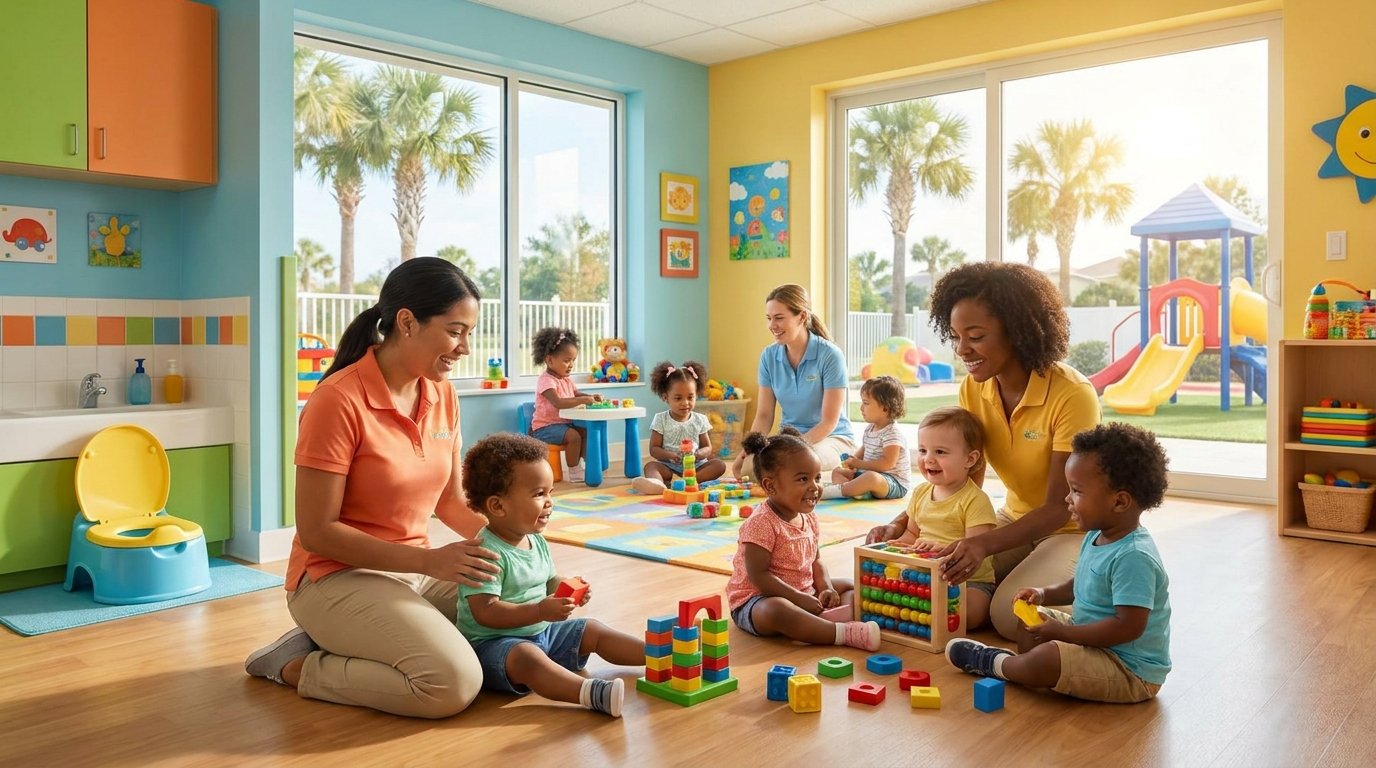
Scheduled bathroom breaks: Children are taken to the bathroom at regular intervals — after meals, before nap, after nap, and before going outside. This routine builds habits without pressure.
Peer modeling: One of the biggest advantages of daycare potty training is that children see their peers using the toilet. This natural motivation is something you cannot replicate at home.
Positive reinforcement: Sticker charts, verbal praise, and high-fives celebrate successes. Quality daycares never shame or punish accidents.
Consistency: Every staff member follows the same approach, so the child receives uniform guidance throughout the day.
What You Should Do at Home
Consistency between home and daycare is the single most important factor in successful potty training. Here is how to stay aligned:
- Ask about their method: Find out exactly what words, timing, and rewards the daycare uses, and mirror them at home
- Use the same vocabulary: If the daycare says “potty time,” use the same phrase at home
- Dress for success: Send your child in clothes that are easy to pull up and down quickly — elastic waistbands, no overalls, no belts
- Pack extras: Send at least 3 complete changes of clothes (underwear, pants, socks) in a labeled bag
- Maintain the routine on weekends: Do not revert to diapers on days off unless you want to confuse the process
- Celebrate together: Ask for daily updates and celebrate wins at home too
Common Setbacks and How to Handle Them
Regression after initial success: Completely normal. Stress, illness, a new sibling, or a change in routine can cause temporary regression. Stay calm and maintain the routine without punishment.
Different results at daycare vs home: Some children are potty trained at daycare but have accidents at home, or vice versa. This usually resolves with consistency and patience.
Nap and nighttime accidents: Daytime dryness typically comes months before nap and nighttime dryness. Most daycares use pull-ups during nap even after a child is daytime trained.
What to Send to Daycare During Potty Training
- 3+ complete changes of clothes including socks
- Plastic bags for soiled clothing
- Pull-ups or training underwear as agreed with the daycare
- Wipes (even if the daycare provides some)
- A spare pair of shoes in case of major accidents
Potty training is a partnership. When parents and daycare providers work together, children feel supported and confident. Use our Florida daycare directory to find providers experienced in gentle, effective potty training approaches.
Watch: Related Childcare Tips
Frequently Asked Questions
At what age do Florida daycares start potty training?
Most Florida daycares begin introducing potty concepts when children show readiness signs, typically between 18 months and 3 years. The exact timing depends on the individual child. Quality daycares assess readiness rather than following a rigid age-based timeline.
Should I potty train at home first or let daycare lead?
The best approach is to coordinate with your daycare so you start around the same time and use the same methods. Daycares have extensive experience and the advantage of peer modeling. Starting together and staying consistent produces the fastest results.
What if my child has accidents at daycare?
Accidents are a normal part of potty training. Quality daycares handle them matter-of-factly without shaming or punishing the child. Staff will clean up, help your child change, and continue encouraging bathroom use. Pack plenty of extra clothes.
Do I need to send pull-ups or underwear?
Ask your daycare about their preference. Some prefer pull-ups during the early stages for easier cleanup, while others go straight to underwear for a clearer wet-dry distinction. Follow whatever method they use for consistency.
How long does daycare potty training usually take?
With consistent effort at daycare and home, most children achieve daytime dryness within 2 to 6 weeks. Some children take longer, and that is completely normal. Nighttime and nap dryness often takes several additional months.
Explore More

Trusted Developer
Contributing writer covering Find Licensed Childcare Near You.