How Daycare Helps Your Child’s Social Development
Affiliate links — we may earn a commission
One of the biggest benefits of daycare has nothing to do with giving parents time to work — it is the social education children receive from spending their days with peers. Quality daycare provides a structured environment where children learn to share, communicate, resolve conflicts, and build friendships in ways that are difficult to replicate at home.
The Social Skills Children Learn at Daycare
Sharing and turn-taking: With limited toys and materials, children naturally learn to share and wait their turn. Daycare teachers reinforce these skills through structured activities and gentle guidance.
Communication: Children in group care develop verbal skills faster because they need to communicate with peers and multiple adults throughout the day. They learn to express needs, ask questions, and describe experiences.
Empathy: Seeing other children experience emotions — a friend who is sad, a classmate who is excited — helps children develop empathy. They learn to read facial expressions, understand feelings, and respond with compassion.
Conflict resolution: Disagreements over toys, space, and activities are daily occurrences at daycare. With teacher guidance, children learn to use words instead of aggression, negotiate compromises, and accept outcomes gracefully.
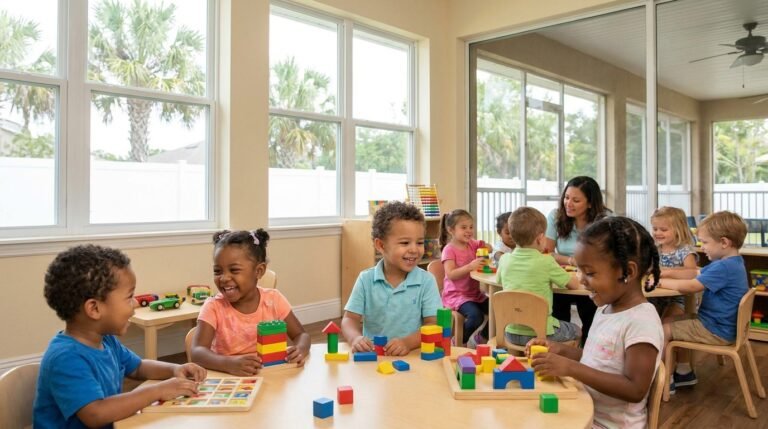
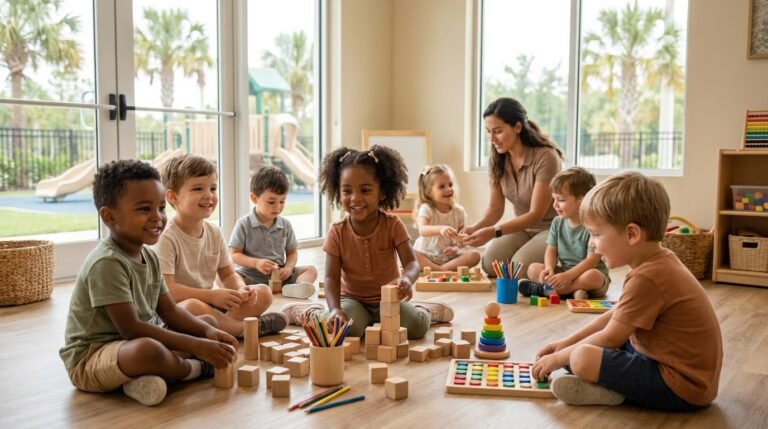
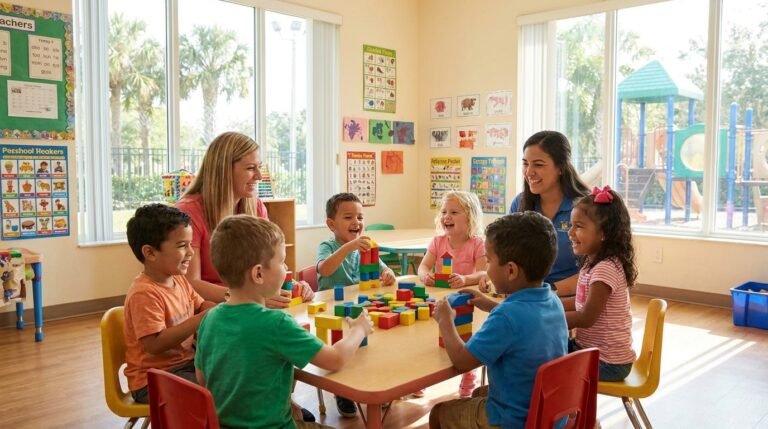
Cooperation: Group activities like building block towers together, singing songs, and playing team games teach children how to work toward shared goals.
Independence: Managing personal tasks like putting on shoes, washing hands, and cleaning up after activities builds self-sufficiency and confidence.
Social Development by Age in Daycare Settings
Infants (0-12 months): While infants do not engage in cooperative play, they begin social learning by observing other babies, responding to voices, and bonding with caregivers. Daycare provides multiple attachment figures, which research shows does not diminish the parent-child bond.
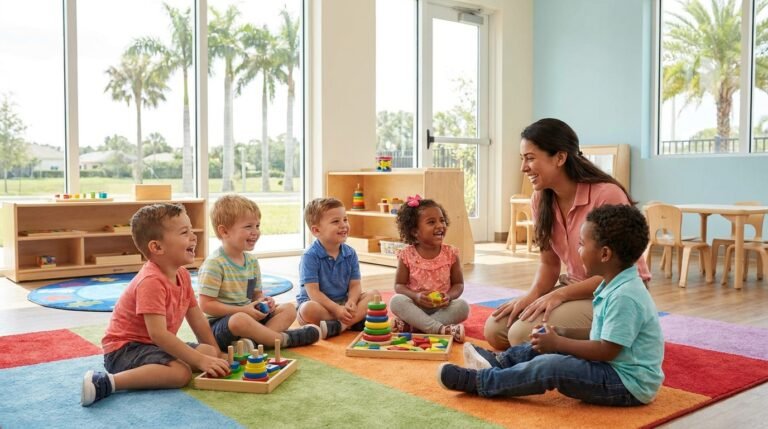
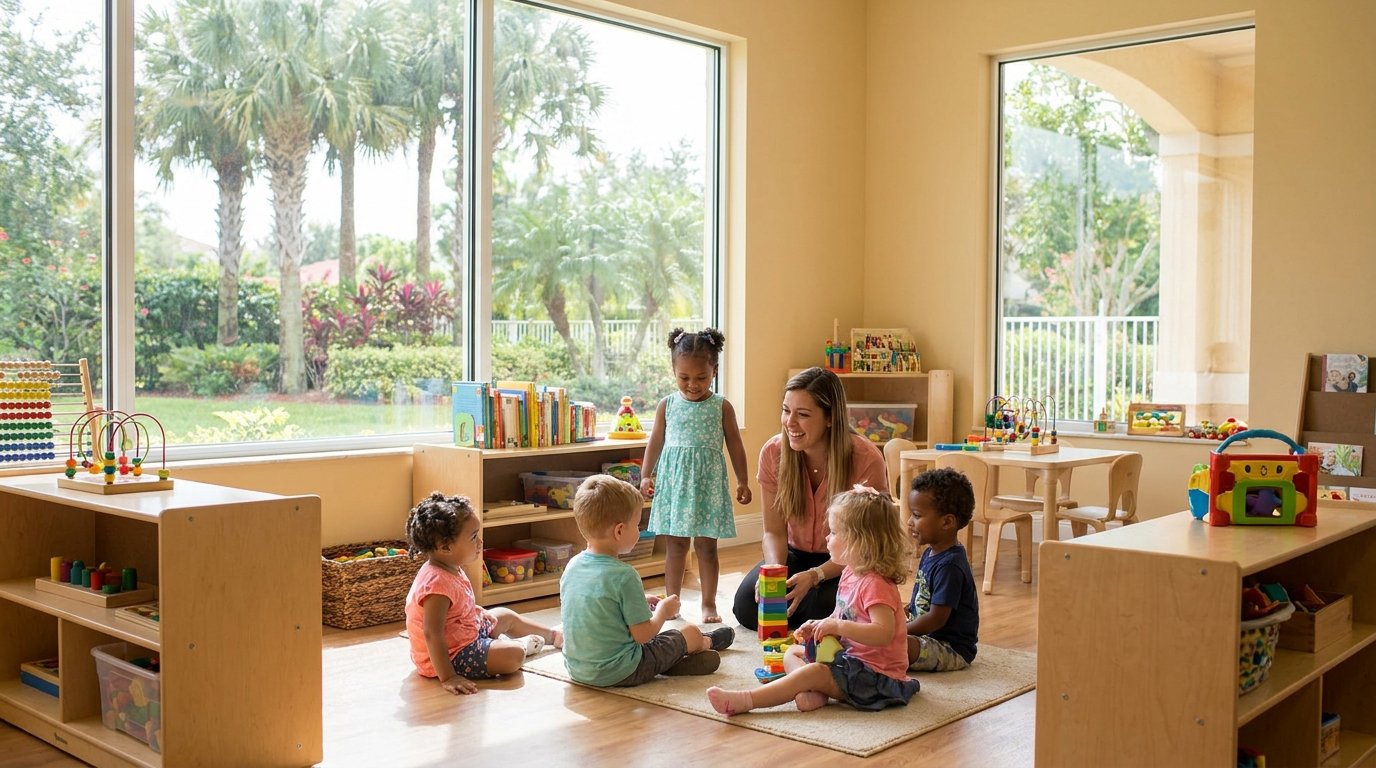
Toddlers (1-2 years): Parallel play dominates this stage — children play alongside each other rather than together. They begin imitating peers, showing interest in what others are doing, and experiencing early conflicts over possession.
Preschoolers (3-4 years): Cooperative play emerges. Children create imaginary scenarios together, assign roles, follow shared rules in games, and develop genuine friendships based on shared interests.
Pre-K (4-5 years): Complex social interactions become the norm. Children navigate group dynamics, understand social hierarchies, demonstrate empathy consistently, and can articulate their feelings and needs clearly.
What Research Shows
Multiple long-term studies have examined the social impact of daycare on children:
- The NICHD Study of Early Child Care found that quality daycare is associated with better social competence and fewer behavior problems in elementary school
- Children who attended high-quality center-based care showed stronger pre-academic and language skills at school entry
- The quality of caregiver interaction is the strongest predictor of social outcomes — not simply attending daycare
The key finding across research: quality matters more than quantity. A few hours in a well-run daycare with skilled teachers produces better social outcomes than full days in a low-quality setting.
How Parents Can Support Social Development at Home
- Ask about their day: Open-ended questions like “Who did you play with today?” encourage children to reflect on social interactions
- Practice at home: Role-play sharing, taking turns, and using words to solve conflicts with siblings or during play dates
- Read social stories: Books about friendship, feelings, and cooperation reinforce concepts learned at daycare
- Model behavior: Children learn social skills primarily by watching adults. Demonstrate politeness, empathy, and conflict resolution in your own interactions
- Arrange playdates: Reinforce daycare friendships with after-hours or weekend time together
Choose a daycare that prioritizes social-emotional learning alongside academics. Browse our Florida daycare directory to find quality providers focused on whole-child development.
Watch: Related Childcare Tips
Frequently Asked Questions
Does daycare help with social skills?
Yes. Research consistently shows that children in quality daycare develop sharing, communication, empathy, and conflict resolution skills earlier than children in home-only care. The structured peer environment provides daily practice in social interaction that is difficult to replicate elsewhere.
At what age does daycare benefit social development most?
While children benefit from social interaction at any age, research suggests the social benefits of daycare become most significant after 12 to 18 months, when children begin showing interest in peer interaction and cooperative play emerges.
Can daycare cause behavior problems?
Low-quality daycare with high ratios, untrained staff, or chaotic environments can contribute to behavioral issues. However, high-quality daycare is associated with better behavior and stronger social skills. The quality of the program, not daycare itself, determines outcomes.
How do I know if my child is developing socially at daycare?
Ask your daycare provider for regular updates on social milestones. Signs of healthy social development include showing interest in peers, engaging in cooperative play, using words to express needs, displaying empathy, and forming friendships. Talk to your pediatrician if you have concerns.
Is daycare better for socialization than staying home?
Daycare provides structured daily peer interaction that is difficult to replicate at home. However, children who stay home can develop strong social skills through regular playgroups, library programs, and community activities. The key is consistent exposure to same-age peers regardless of the setting.
Explore More

Trusted Developer
Contributing writer covering Find Licensed Childcare Near You.