How Much Does Infant Daycare Cost in Florida?
Affiliate links — we may earn a commission
- Florida infant daycare averages $1,100-$1,400/month at centers and $800-$1,000/month at in-home providers
- Miami-Dade is the priciest region; the Panhandle and rural counties are the most affordable
- Florida’s strict 1:4 staff-to-infant ratio is a major cost driver compared to toddler and preschool care
- School Readiness subsidies and employer FSAs can reduce your out-of-pocket costs significantly
Here is the thing nobody warns you about when you are expecting: infant daycare is the single most expensive childcare age bracket, and it is not even close. When I first started researching Florida infant care costs, the numbers genuinely shocked me. But once you understand why it costs what it does, you can start finding ways to make it work.
Average Infant Daycare Costs Across Florida
Infant care — typically for babies from 6 weeks to 12 months — costs more than any other age group:
- Miami-Dade: $1,300-$1,500/month; premium centers in Coral Gables hit $1,800+
- Fort Lauderdale / Broward: $1,200-$1,450/month
- Orlando: $1,100-$1,350/month
- Tampa Bay: $1,050-$1,300/month
- Jacksonville: $1,000-$1,250/month
- Tallahassee: $900-$1,100/month
- Panhandle / Rural areas: $800-$1,000/month
In-home family daycares typically charge 20-30% less, running $800-$1,000/month in most areas.
Why Is Infant Care So Expensive?
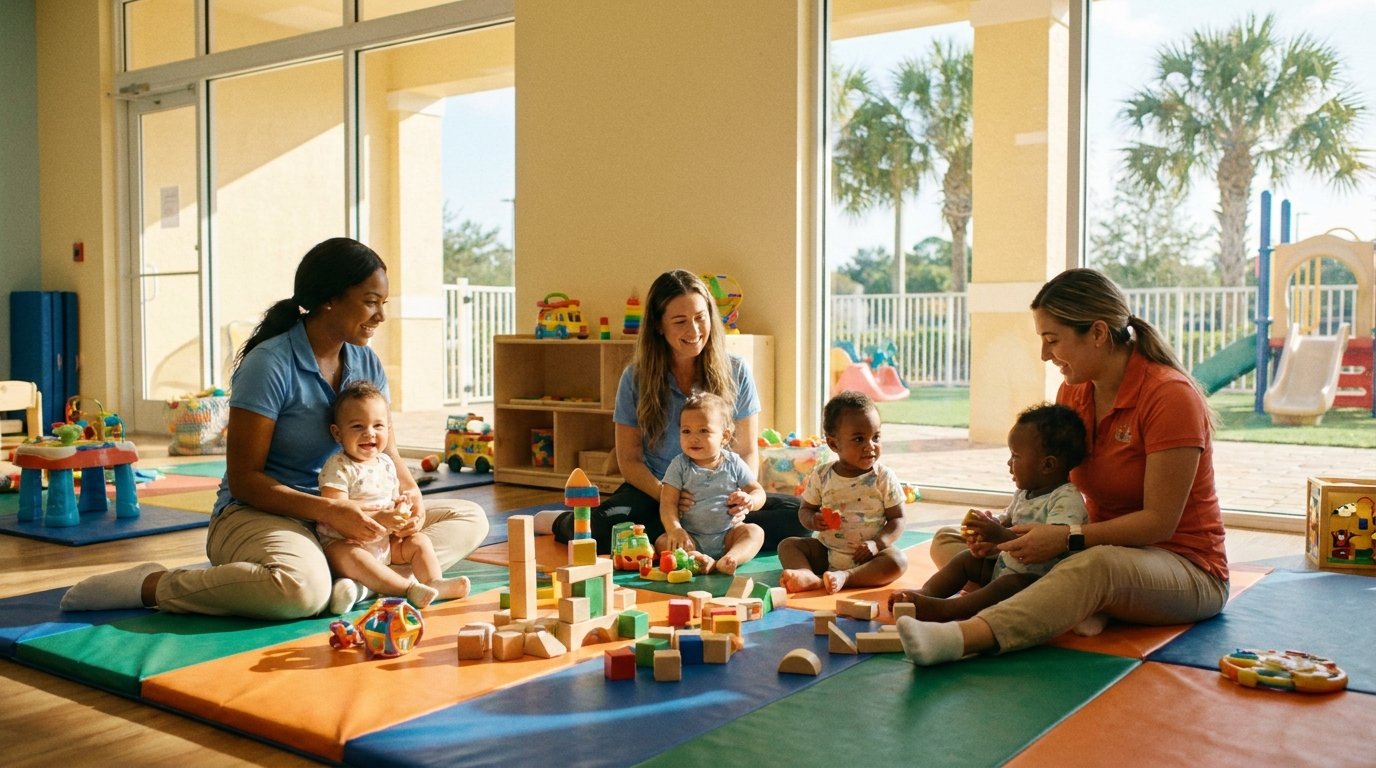
It comes back to ratios. Florida law requires a 1:4 staff-to-child ratio for infants — one caregiver for every four babies. Compare that to preschoolers at 1:15. An infant room with 8 babies needs two full-time teachers plus substitutes and benefits.
Infant rooms also require specialized equipment — cribs meeting federal safety standards, dedicated diaper-changing stations, separate sleep areas, and specific licensing approvals.
Center-Based vs In-Home Infant Care
Center-based ($1,100-$1,400/month): Regulated with regular DCF inspections, multiple caregivers for backup, structured daily routines.
In-home family daycare ($800-$1,000/month): Smaller groups (3-4 infants max), more personalized environment, often more flexible hours. See the full comparison.
How to Reduce Infant Daycare Costs
- Dependent Care FSA: Set aside up to $5,000 pre-tax annually, saving 20-30%
- School Readiness Program: Florida’s subsidy through Early Learning Coalitions can cover most costs for qualifying families
- Federal Child Care Tax Credit: Claim up to $3,000 per child under 13
- Negotiate: Many centers offer sibling discounts (10-15%), prepayment discounts, or military rates
What to Look for in an Infant Daycare
- Current Florida DCF license specifically covering infant care
- Clean inspection history with no serious violations
- Safe sleep practices — babies on backs, no loose bedding, individual cribs
- Proper feeding procedures and willingness to handle breast milk
- Full safety compliance including CPR-certified staff
Check our complete Florida daycare cost breakdown for how infant rates compare to other age groups.
Frequently Asked Questions
What is the cheapest infant daycare option in Florida?
Licensed in-home family daycares are typically the most affordable at $800-$1,000/month. The School Readiness Program can cover costs entirely for qualifying low-income families.
At what age does daycare get cheaper in Florida?
Costs decrease at each milestone. Toddler care is 10-15% less than infant. The biggest drop comes at age 4 when children qualify for free VPK.
Do Florida daycares accept newborns?
Most licensed centers accept infants starting at 6 weeks old. Some require 8 or 12 weeks minimum. Getting on a waitlist during pregnancy is recommended.
Is infant daycare tax deductible in Florida?
Florida has no state income tax, but infant daycare qualifies for the federal Child and Dependent Care Tax Credit (up to $3,000/child) and Dependent Care FSA ($5,000 pre-tax annually).
Why is infant daycare more expensive than toddler daycare?
Florida requires a 1:4 staff ratio for infants vs 1:6 for toddlers and 1:15 for preschoolers. More staff per child means higher labor costs, plus infant rooms need specialized equipment.

Trusted Developer
Contributing writer covering Find Licensed Childcare Near You.