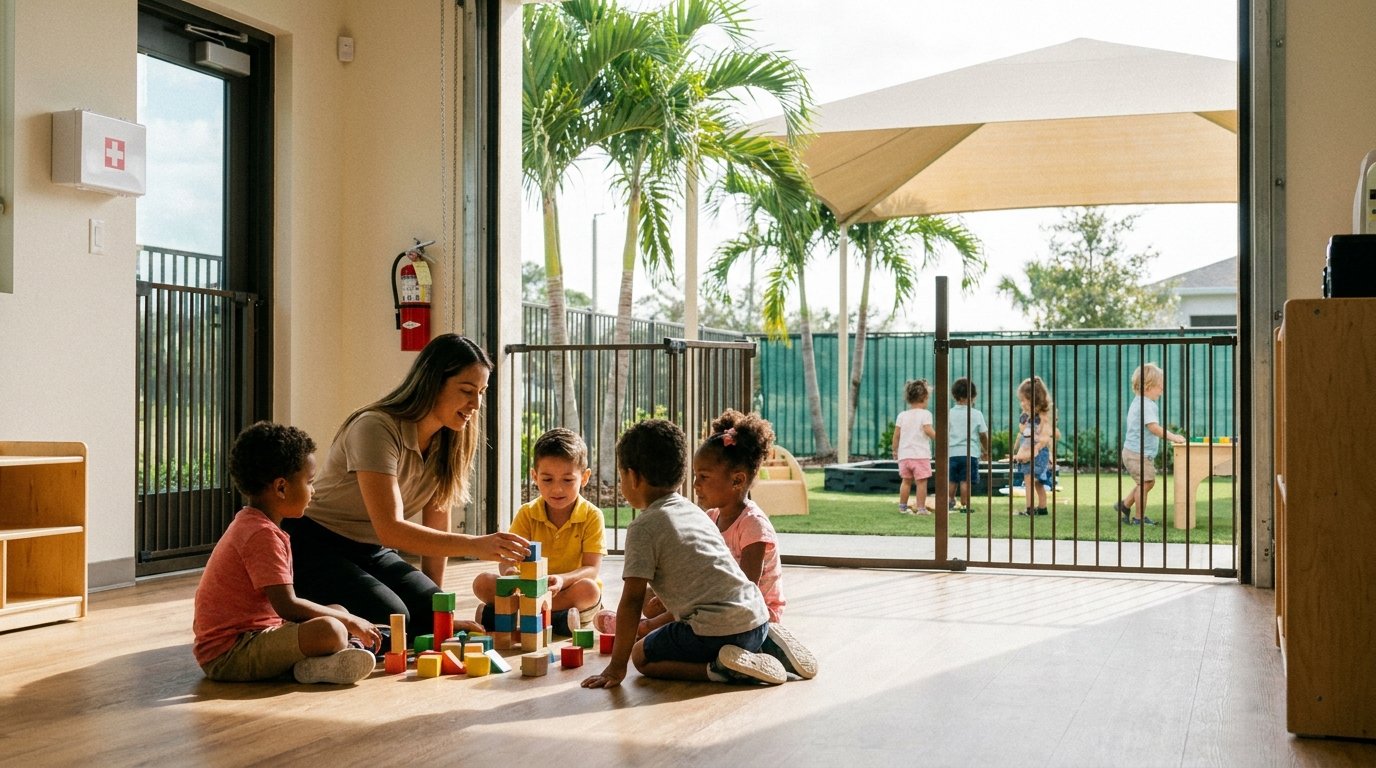
Florida Daycare Safety Standards: What Every Parent Should Know
Affiliate links — we may earn a commission
When you drop your child off at daycare, you’re placing an enormous amount of trust in that facility. Understanding Florida’s safety standards helps you know what protections are already in place — and what to look for on your own.
Background Checks Are Comprehensive
Florida takes background screening seriously. Every person who works in a licensed childcare facility — and that includes owners, directors, teachers, substitutes, and even volunteers with unsupervised access — must pass a Level 2 background screening. This involves:
- Fingerprint-based search through FDLE (Florida Department of Law Enforcement)
- FBI national criminal history check
- Cross-reference with the Florida Abuse Hotline records
- Sexual predator/offender registry check
Screenings must be completed before the person starts working, and they’re renewed every 5 years. There are disqualifying offenses that permanently bar someone from working in childcare, including any crime against a child, sexual offenses, and certain violent felonies.
Staff Training Requirements
It’s not enough to pass a background check. Florida requires specific training for all childcare personnel:
- 45-hour introductory course covering child development, health and safety, nutrition, and behavioral guidance
- Annual in-service training of at least 10 hours on relevant topics
- CPR and First Aid certification — must be current at all times
- Safe sleep training for anyone caring for infants
Directors face additional requirements, including a director credential or equivalent educational background. These aren’t just check-the-box requirements — they directly impact the quality of care your child receives.
Facility Safety Standards
The physical environment must meet detailed standards:
Indoor Space
A minimum of 20 square feet of usable indoor floor space per child is required. This doesn’t include bathrooms, kitchens, hallways, or storage areas. The space must be ventilated, well-lit, and maintained at a comfortable temperature.
Outdoor Space
Outdoor play areas must be fenced with a minimum height of 4 feet. Equipment must be age-appropriate and maintained in safe condition. The surface under climbing equipment must be impact-absorbing (mulch, rubber matting, etc.). Pools and water features must be inaccessible to children unless supervised structured water activities are taking place.
Fire Safety
Annual fire inspections are required. Facilities must have working smoke detectors, fire extinguishers, clearly marked exits, and a written fire evacuation plan. Fire drills must be conducted monthly.
Health and Sanitation
Facilities must maintain clean, sanitary conditions. This includes regular handwashing protocols, proper diaper-changing procedures, food handling standards, and daily cleaning of surfaces and toys. Sick-child policies must be clearly established and communicated to parents.
Emergency Procedures
Every licensed facility in Florida must have written emergency plans covering:
- Severe weather: Florida’s hurricane season (June–November) makes this especially important. Facilities should have a clear plan for weather emergencies.
- Medical emergencies: At least one staff member trained in CPR and First Aid must be on-site at all times. Emergency contact information for each child must be readily accessible.
- Missing child: Procedures for immediate response and notification of parents and authorities.
- Lockdown: Security procedures for external threats.
Transportation Safety
If a facility provides transportation, additional standards apply. Vehicles must be inspected, drivers must have clean records and CDL where required, and there must be a system to account for every child getting on and off the vehicle. Florida law requires a thorough check of the vehicle after each trip to ensure no child is left behind — a standard that was strengthened after several tragic incidents nationwide.
What Parents Can Do
Don’t rely solely on the state to keep your child safe. Here’s what you can do:
- Verify the license: Check at myflfamilies.com
- Read inspection reports: They’re public record — use them
- Visit unannounced: A good facility will welcome you anytime
- Talk to your child: Age-appropriate conversations about their day, their teachers, and whether they feel safe
- Report concerns: Call the Florida Abuse Hotline at 1-800-962-2873 if you suspect any child is being harmed
Search for licensed daycare facilities across Florida in our comprehensive directory. We cover Miami, Orlando, Tampa, Jacksonville, and hundreds of other cities.
Staying Informed and Involved
Safety doesn’t stop at the licensing level — it’s an ongoing partnership between parents and providers. Stay actively involved in your child’s daycare experience. Attend parent meetings, read the newsletters, and build a relationship with your child’s teachers. The more connected you are, the more likely you’ll notice if something changes.
Florida also encourages parents to participate in their child’s care setting. Under state law, parents have the right to visit their child’s daycare at any time during operating hours without prior notice. If a facility ever tries to restrict your access or discourage unannounced visits, that should raise a serious red flag.
Finally, keep an eye on DCF’s inspection cycle. Re-licensing inspections happen annually, and results are posted publicly. Make it a habit to check your facility’s inspection report once a year at myflfamilies.com. It takes two minutes and gives you peace of mind — or an early warning if standards are slipping.
Browse our Florida daycare directory for licensed facilities in your city.

Trusted Developer
Contributing writer covering Find Licensed Childcare Near You.