How to Choose a Daycare in Florida: A Parent’s Complete Guide
Affiliate links — we may earn a commission
Finding the right daycare for your child is one of the biggest decisions you’ll make as a parent. It’s not just about convenience or cost — it’s about trusting someone else with your kid’s safety, happiness, and development. If you’re living in Florida, here’s what you need to know to make that choice with confidence.
Start With Your Non-Negotiables
Before you even start Googling, sit down and figure out what matters most to your family. Is it location? Budget? A specific educational philosophy? Hours that fit your work schedule? Having a clear list of priorities helps you filter through Florida’s thousands of licensed facilities without getting overwhelmed.
Some parents prioritize a Montessori or play-based approach. Others want a structured, academic-readiness program. Neither is wrong — it’s about what fits your child’s temperament and your family’s values.
Verify the License First
This is non-negotiable. Every childcare facility in Florida must be licensed by the Department of Children and Families (DCF). Before you even schedule a tour, look up the facility at myflfamilies.com. You can see their license status, inspection history, and any complaints or violations on file.
A clean record doesn’t guarantee perfection, but a facility with repeated violations is a clear red flag. Pay attention to the nature of violations — minor paperwork issues are different from safety concerns.
What to Look for During a Tour
Once you’ve shortlisted a few places, visit in person. And try to visit during active hours, not during nap time when everything’s quiet. Here’s what to watch for:
- Staff-child interactions: Are teachers on the floor with kids, or standing around? Are they warm, engaged, and responsive?
- Cleanliness: The place doesn’t need to be spotless (kids are messy), but it should be sanitary. Check the bathrooms and kitchen area.
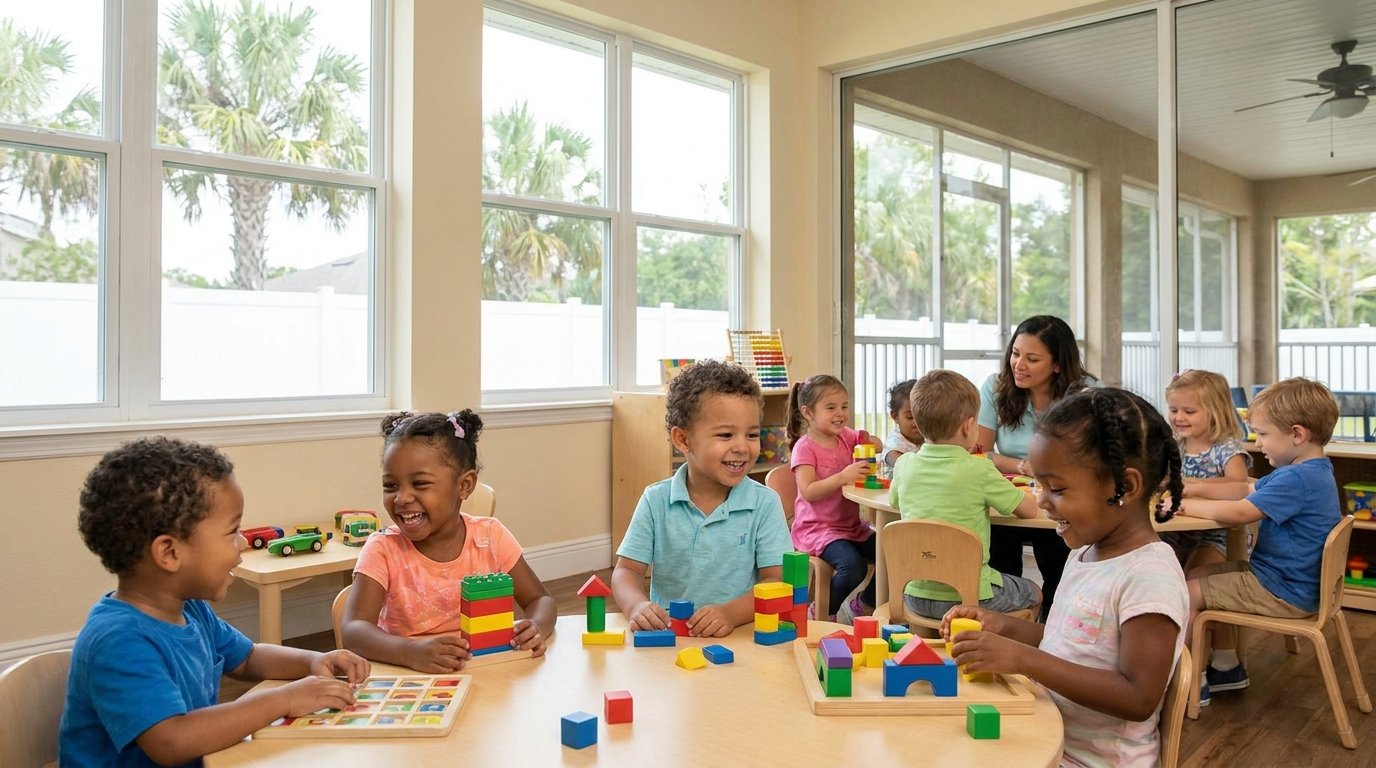
- Safety measures: Are outlets covered? Are cleaning supplies locked away? Is the outdoor play area fenced and age-appropriate?
- Noise level: Some happy noise is good. Constant crying or chaos might indicate understaffing.
- Display of licenses: A licensed facility will have their DCF license posted visibly. If you don’t see it, ask.
Questions to Ask the Director
Don’t be afraid to ask tough questions. Any good childcare director will welcome them. Here are some essentials:
- What are your staff-to-child ratios? (Florida requires specific ratios by age — 1:4 for infants, 1:6 for 1-year-olds, up to 1:25 for school-age kids.)
- What’s your staff turnover rate? High turnover means instability for your child.
- How do you handle behavioral issues?
- What’s your sick-child policy?
- How do you communicate with parents during the day?
- What does a typical day look like?
- Do you provide meals and snacks? What’s on the menu?
- What’s your emergency plan?
Red Flags to Watch For
Trust your gut. If something feels off, it probably is. But here are some concrete warning signs:
- They won’t let you visit unannounced or restrict access to certain areas
- Staff seem disengaged, stressed, or annoyed by the children
- The facility can’t provide proof of licensing or insurance
- High child-to-staff ratios that exceed Florida’s legal limits
- No clear curriculum or daily schedule
- Negative reviews that mention the same issues repeatedly
Understanding Florida Daycare Costs
Childcare in Florida isn’t cheap, but it varies significantly by region. In general, expect to pay anywhere from $170 to $400 per week for full-time care, depending on your city, your child’s age (infant care costs more), and the type of facility. Cities like Miami, Fort Lauderdale, and Naples tend to be on the higher end, while Jacksonville, Pensacola, and Tallahassee are more affordable.
Florida’s Early Learning Coalition offers financial assistance through the School Readiness Program for qualifying families. It’s worth checking whether you’re eligible — it can make a significant difference.
Types of Childcare Available
You’ve got options in Florida beyond traditional daycare centers. Family childcare homes offer a smaller, more intimate setting. Faith-based programs often integrate values-based learning. Preschools focus more on academic preparation. And au pairs or nannies provide one-on-one care in your own home.
Each has trade-offs in terms of cost, socialization opportunities, flexibility, and educational structure. Think about what your child needs at their current developmental stage.
Making the Final Decision
After your visits, take a day or two to reflect. Talk to other parents whose kids attend the facility. Check online reviews, but take them with a grain of salt — one bad review among dozens of positive ones is normal. Look at the big picture.
The right daycare for your family is one where your child will be safe, cared for, and stimulated — and where you feel genuinely comfortable dropping them off every morning. Trust the process, do your homework, and you’ll find it.
Browse our Florida daycare directory to find licensed childcare facilities near you.
A Note About Online Reviews
Online reviews can be helpful, but take them in context. A single negative review among many positive ones usually isn’t a dealbreaker. Look for patterns instead — if multiple parents mention the same issue (high turnover, poor communication, cleanliness concerns), pay attention. And remember that happy parents are less likely to leave reviews than unhappy ones, so a facility with mostly positive feedback is doing something right.

Trusted Developer
Contributing writer covering Find Licensed Childcare Near You.